
Workflow
MyHealthVaultAI is best understood as a patient-facing clinical intelligence workflow rather than a single app feature.
The operating model is designed to capture an encounter, structure its recommendations, surface medication changes and safety-relevant conflicts, and preserve the result inside a persistent portal. The objective is to reduce post-visit information loss while improving patient understanding of what changed, what requires follow-through, and what may need clarification.
System pipeline
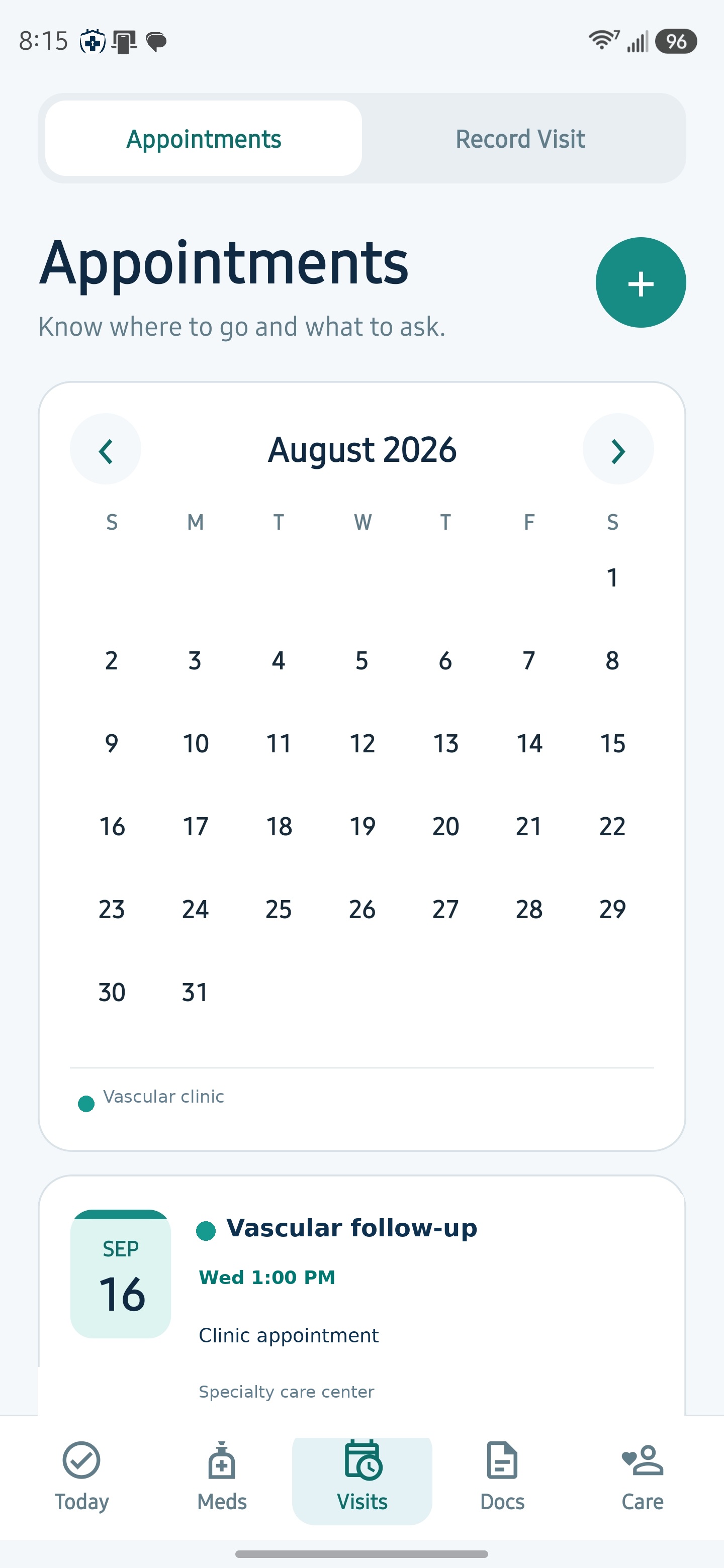
System stage 01
Visit capture and encounter acquisition
MyHealthVaultAI begins with a consent-based encounter capture layer designed to preserve physician-patient dialogue as the upstream signal for downstream analysis. Rather than treating the appointment as a transient conversation, the platform frames the visit as a structured source for recommendation extraction, patient recall support, and longitudinal follow-through.
Technical framing: This stage establishes the raw clinical input used by the rest of the intelligence pipeline.
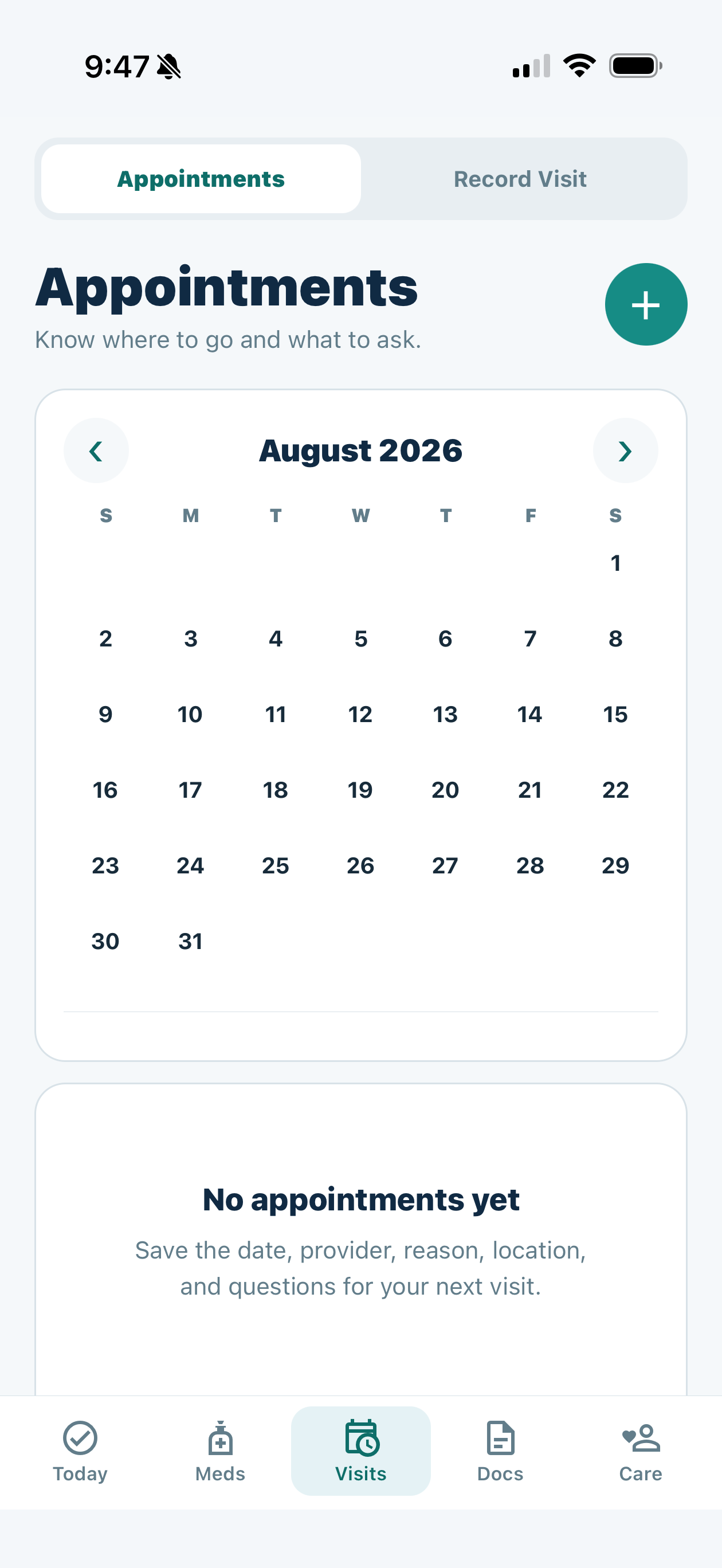
System stage 02
AI summary synthesis and recommendation structuring
Once the encounter is complete, the system transforms unstructured visit dialogue into a patient-facing summary layer that organizes clinically relevant information into a more legible post-visit artifact. The objective is not simple transcription. The objective is structured synthesis of assessments, treatment direction, medication instructions, and follow-up expectations.
Technical framing: This layer converts conversational medical content into structured visit intelligence that the patient can review, retain, and act on more easily.
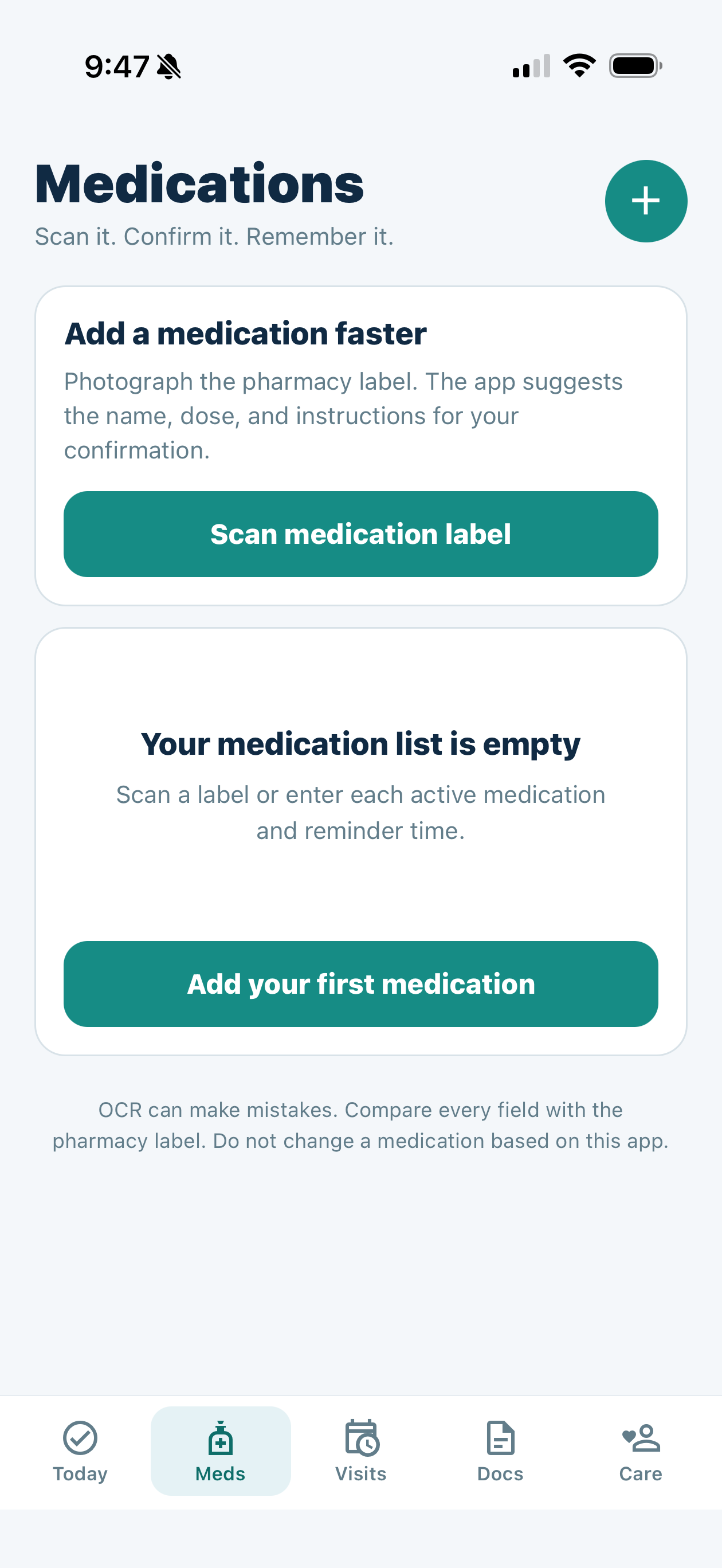
System stage 03
Medication change detection and structured reconciliation
Medication changes are among the highest-risk points of failure after a visit. MyHealthVaultAI compares extracted medication instructions against the active patient record so initiation events, discontinuations, dose adjustments, and schedule modifications can be surfaced explicitly rather than remaining buried inside narrative text.
Technical framing: This stage turns medication changes into reviewable structured differences before they are accepted into the ongoing record.
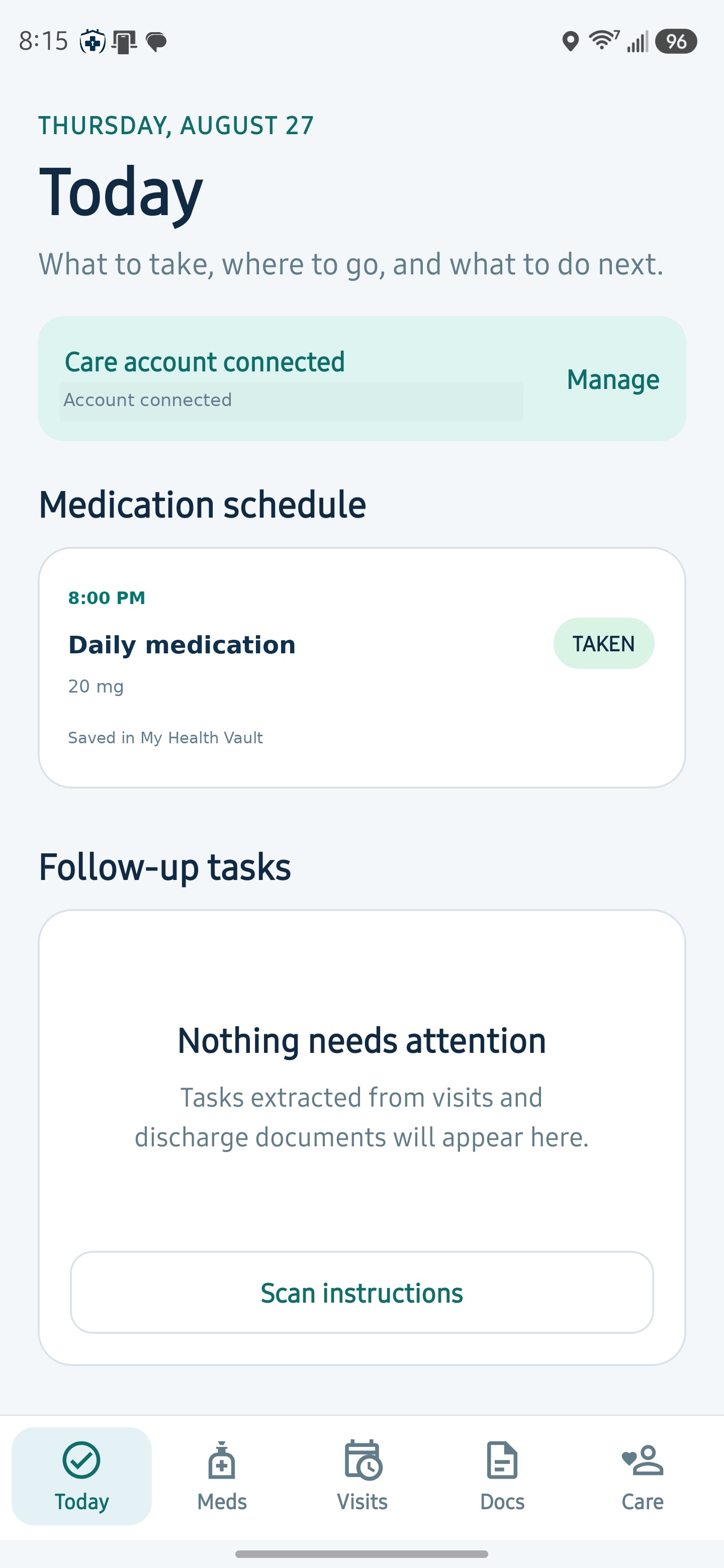
System stage 04
Conflict-state detection and safety review
The platform is also designed to function as a safety-aware review layer. It compares recommendation states across visits and medication records to identify discrepancy patterns, contradiction states, and alert-worthy conflicts that may require clarification. This helps expose instruction drift that can emerge across fragmented care and multiple providers.
Technical framing: This stage moves the system beyond capture alone by introducing cross-visit conflict detection and medication safety review.
System stage 05
Longitudinal record storage and portal persistence
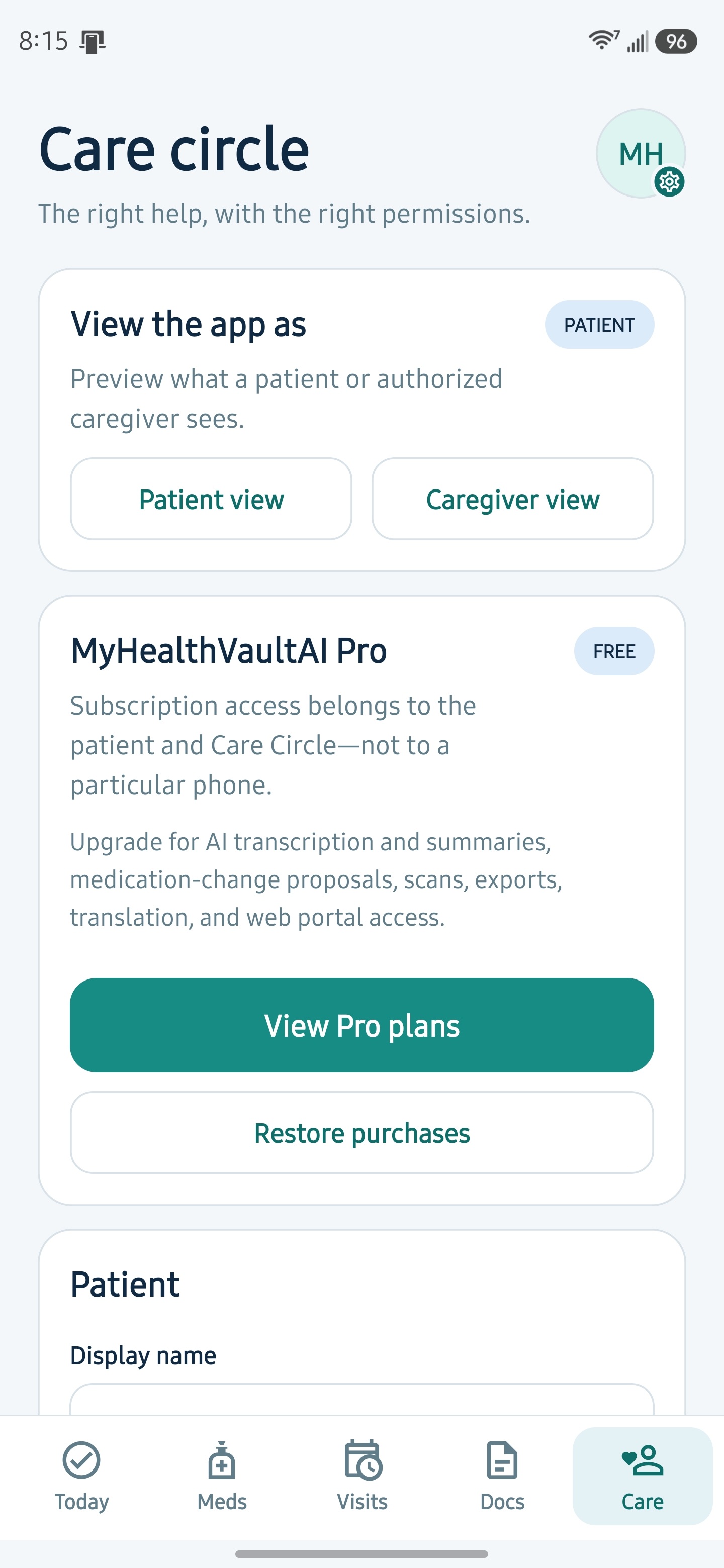
After patient review, the structured summary, medication state, and decision history persist inside one portal environment rather than being lost across isolated encounters. The portal acts as the longitudinal memory layer of the platform, allowing patients to return to prior visits, review recommendation history across time, and maintain continuity between appointments.
Technical framing: This stage gives the workflow durable record retention and transforms the product from a single-use tool into a persistent patient intelligence system.
Secure web portal
The patient record does not stop at the phone
MyHealthVaultAI includes a secure browser-based portal where patients can review medications, visits, documents, alerts, appointments, and longitudinal care history from a larger screen.
Authorized caregivers can use the same portal to support one or more patients, with access limited to the relationships and permissions each patient grants.
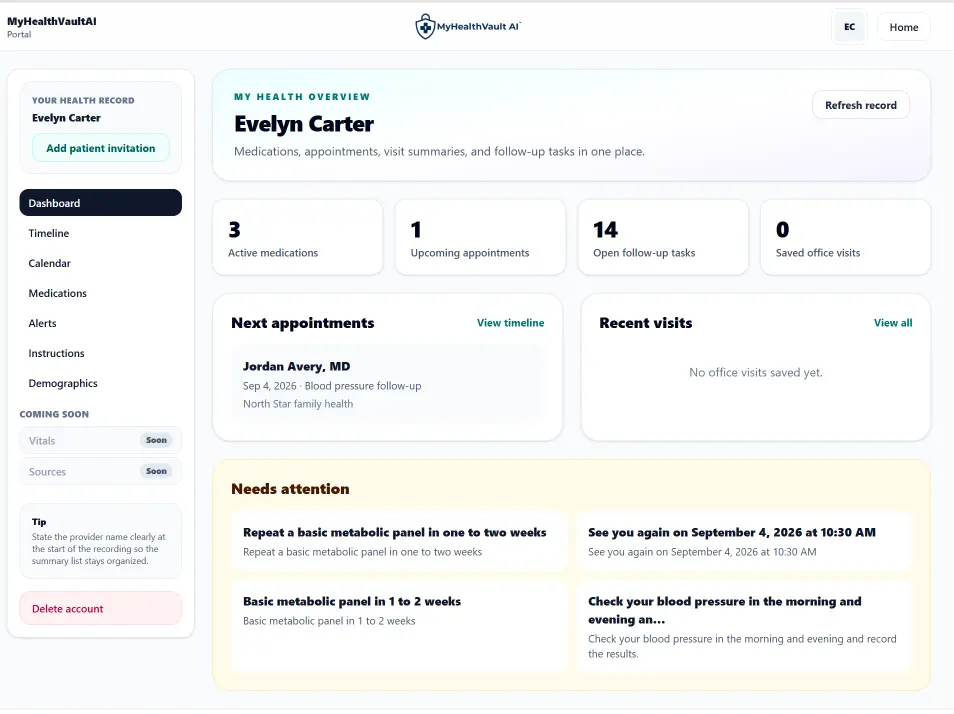
Complete care dashboard
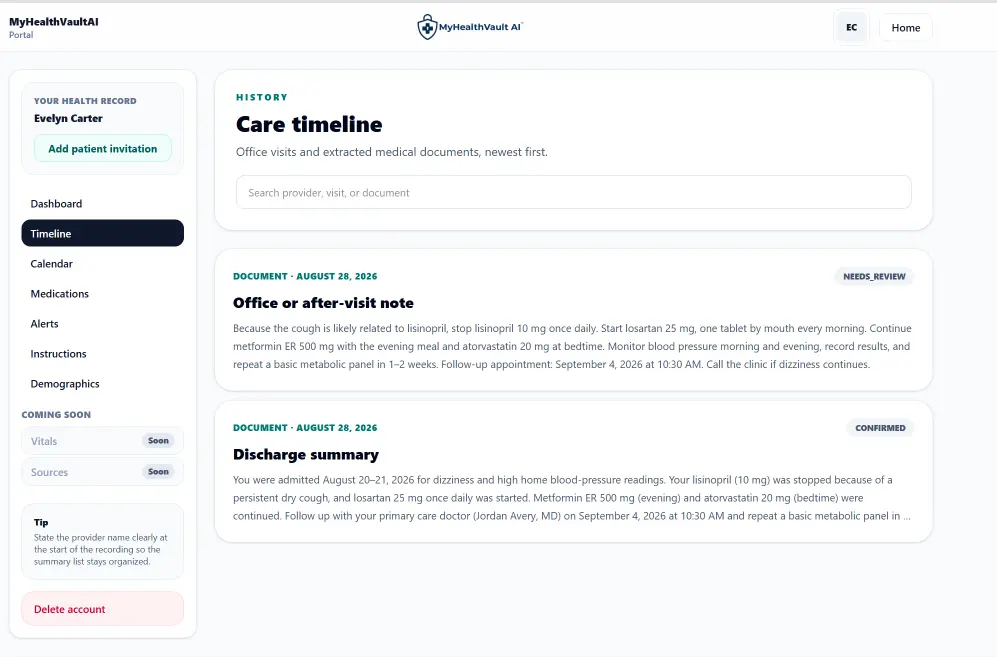
Longitudinal care timeline
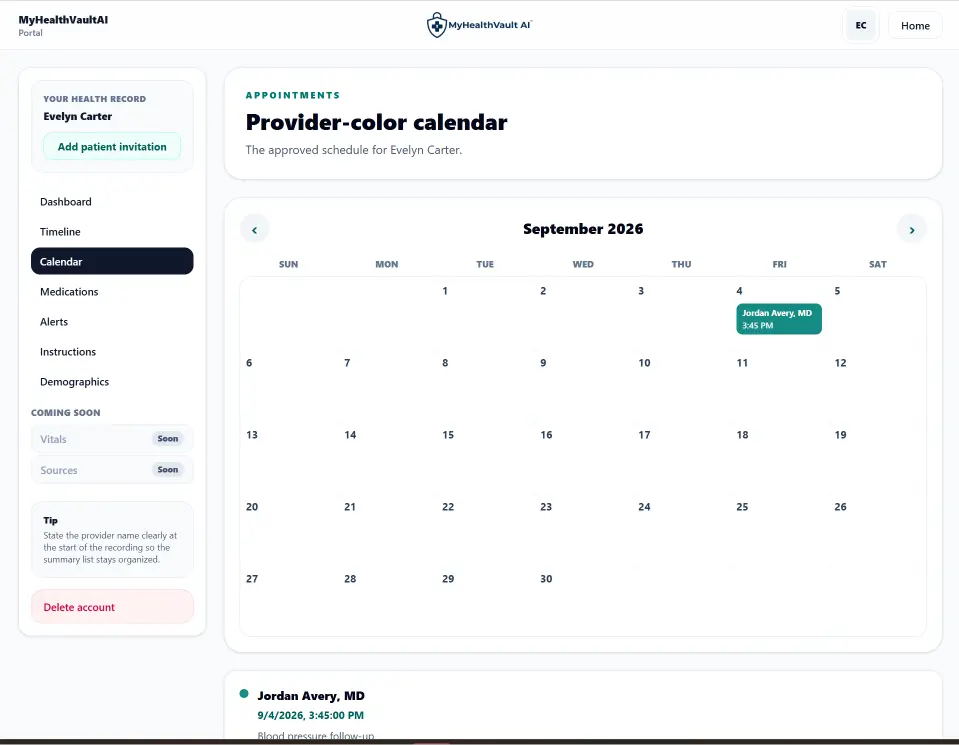
Provider-color calendar
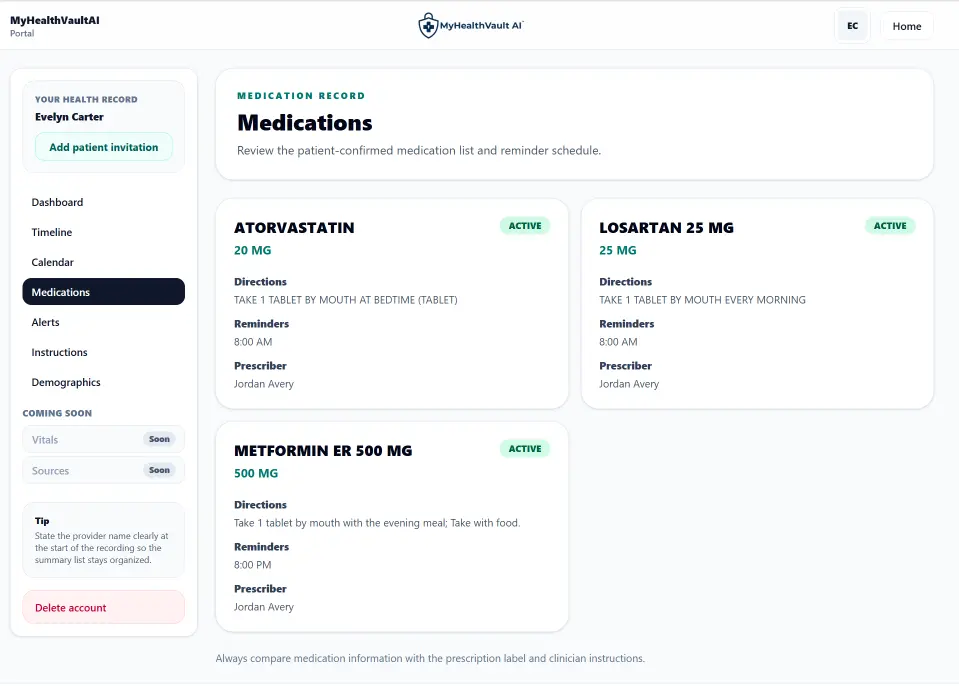
Patient-confirmed medication record
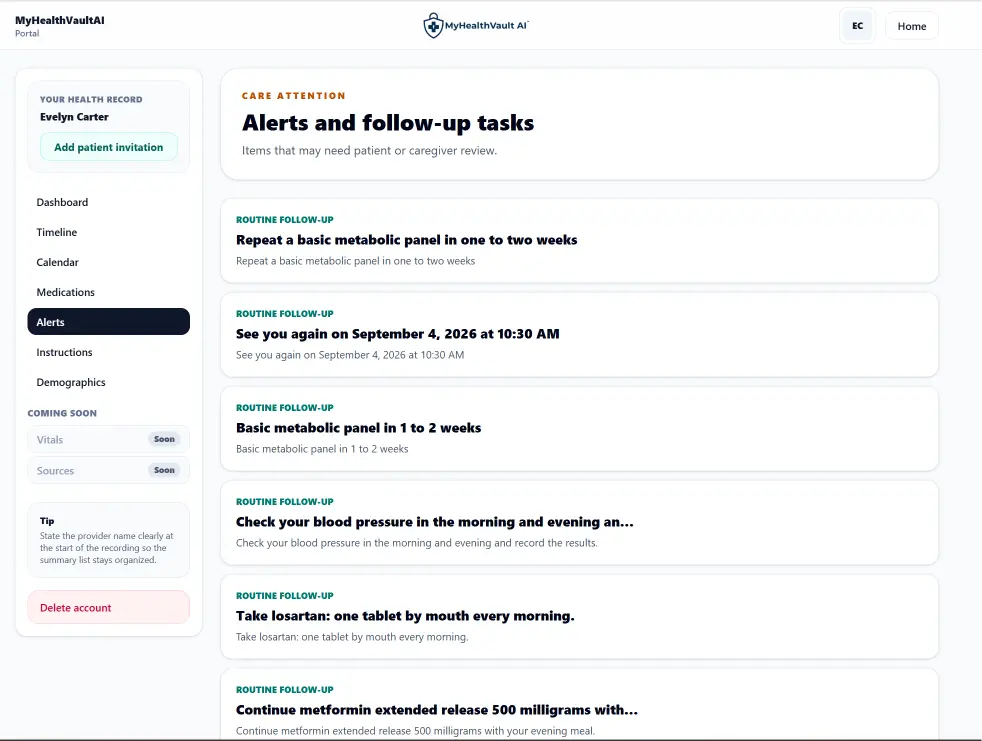
Alerts and follow-up tasks
Why this matters
Built around the information breakdowns that happen after a medical visit ends
The value of the system is strongest when tied directly to real patient failure points: forgotten instructions, misunderstood medication changes, fragmented provider guidance, and poor continuity between visits.
Patient memory problem
Important physician instructions often degrade after the visit. MyHealthVaultAI is designed to preserve a clearer, more durable patient-facing representation of what occurred.
Medication safety problem
Medication changes are easy to miss when they are buried inside narrative summaries. Structured reconciliation and alert logic make those changes more visible, reviewable, and safer to act on.
Continuity problem
Patients need one place to return to later. The portal provides that persistent continuity layer across visits, decisions, medication updates, and follow-through.